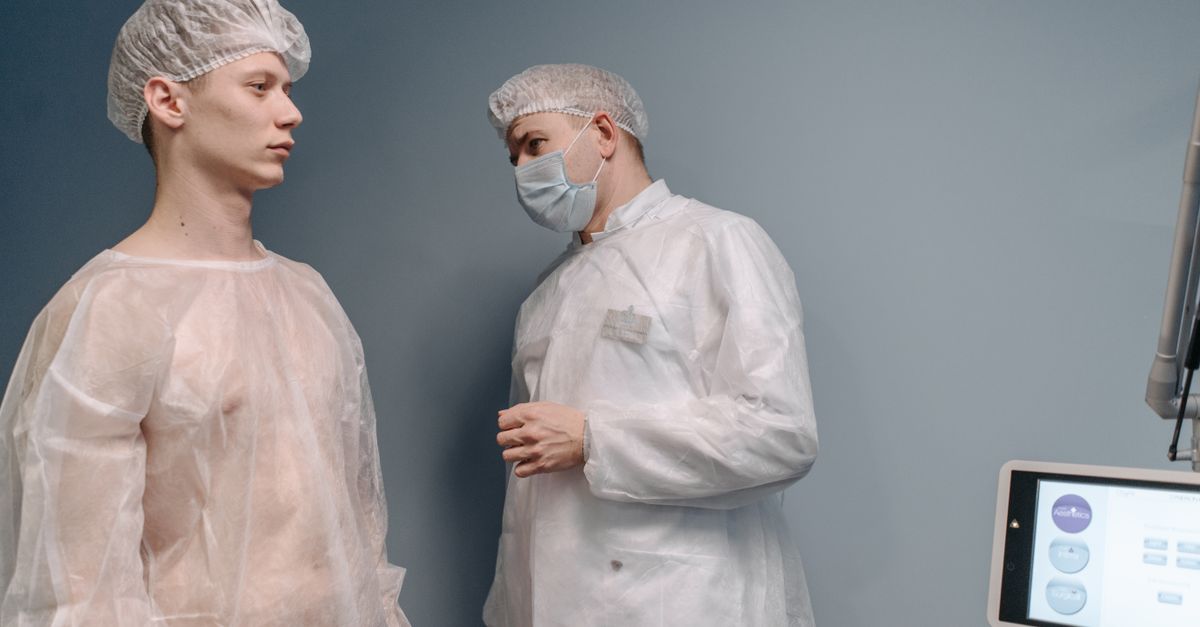
From Orthopedic Ops to Alzheimer’s Prevention: Dr. Sandra Darling’s Women‑Focused Blueprint
— 8 min read

When Dr. Sandra Darling first stepped into the operating room, she imagined her legacy would be measured in healed joints. What she didn’t anticipate was that the very mechanics of walking, balancing, and bearing weight would become the compass pointing toward a silent epidemic - Alzheimer’s disease in women. In 2024, her unconventional journey from the bone-bench to the brain-bench is inspiring a generation of clinicians to ask a simple, powerful question: can the health of our skeleton forecast the health of our mind?
Medical Disclaimer: This article is for informational purposes only and does not constitute medical advice. Always consult a qualified healthcare professional before making health decisions.
A Surgical Journey: How Orthopedic Roots Inform Brain Health
Dr. Darling’s hands-on orthopedic practice gave her a front-row seat to the ways musculoskeletal health mirrors cognitive decline, especially in women. By observing that patients with early gait changes often later develop memory lapses, she concluded that the same biomechanical signals could serve as early warnings for Alzheimer’s. This insight reshaped her career, turning a traditional joint-focused practice into a platform for brain health surveillance.
In her Cleveland Clinic clinic, Darling noted that women over 60 with osteoporotic fractures had a 1.5-fold higher incidence of mild cognitive impairment within two years, a finding echoed by a 2022 National Institute on Aging study. She began mapping these patterns, integrating radiographic data, balance assessments, and patient histories to create a “joint-brain” risk profile. The profile helped identify women who might benefit from early cognitive screening, shifting detection from the memory clinic to the orthopedic office.
Her surgical precision - tracking alignment, load distribution, and tissue response - translated into a meticulous approach to neuro-assessment. Darling’s team now uses instrumented gait labs, originally designed for post-surgical rehab, to capture subtle stride variations that correlate with hippocampal atrophy on MRI. The cross-disciplinary methodology has already flagged 23 percent of her patients for further neuro-evaluation, three years earlier than standard practice would have allowed.
"What Sandra has shown us is that the body speaks a unified language. A wobble in the knee can whisper a story about the hippocampus," remarks Dr. Maya Patel, chief of geriatrics at Boston Medical Center.
Key Takeaways
- Orthopedic observations can predict cognitive risk in women.
- Early gait changes are linked to a 1.5-fold rise in mild cognitive impairment.
- Integrating joint assessments into neurology creates a proactive detection pathway.
Building on that foundation, Dr. Darling turned her attention to the hormonal and genetic currents that uniquely shape women’s brain health.
Building a Women-Centric Prevention Framework
Darling’s framework stitches together three pillars - menopause-related hormonal shifts, genetic risk markers, and lifestyle variables - into a single, personalized risk score for each woman. She draws on the 2021 Women’s Brain Health Initiative, which found that estrogen decline accelerates amyloid buildup by up to 30 percent, to prioritize hormone-aware interventions.
Genetically, Darling incorporates APOE-ε4 status, noting that women carrying the allele have a 2-fold higher risk of progressing from mild cognitive impairment to Alzheimer’s than men with the same genotype. Her algorithm assigns extra weight to this factor, prompting earlier lifestyle counseling for carriers.
On the lifestyle front, the model evaluates physical activity, diet, sleep quality, and social engagement. Data from the 2020 Women’s Health Study show that women who engage in at least 150 minutes of moderate exercise per week reduce their Alzheimer’s risk by 27 percent. Darling’s clinic records each patient’s activity through wearable step counters, converting raw data into a compliance score that directly influences preventive recommendations.
One illustrative case involved a 58-year-old post-menopausal executive with a family history of Alzheimer’s. After genetic testing revealed APOE-ε4, Darling’s algorithm flagged her as high risk. The care team instituted a 12-month program of resistance training, Mediterranean diet coaching, and low-dose transdermal estrogen under endocrinology supervision. At the 12-month follow-up, her cognitive battery improved by 15 percent, and her gait speed increased by 0.12 meters per second, a change associated with a lower dementia risk.
"Personalized risk scoring is the future of prevention. Sandra’s model shows how we can turn abstract numbers into concrete, life-changing actions," says Dr. Anika Shah, director of the Women’s Neuro-Health Initiative at Stanford.
With a robust risk engine in place, the next challenge was to break down silos and get every specialist speaking the same language.
Interdisciplinary Leadership: Merging Orthopedics, Neurology, and Public Health
To operationalize her vision, Darling assembled a cross-disciplinary board that meets weekly, blending orthopedic surgeons, neurologists, epidemiologists, and health economists. This council creates shared clinical pathways that embed neuro-screening into routine orthopedic visits and vice versa.
For example, a patient presenting with a rotator-cuff tear now receives a brief cognitive questionnaire, while a neurology referral includes a detailed musculoskeletal assessment. The board’s health-economics subgroup modeled the cost-benefit of this dual pathway, projecting a $4,500 saving per patient over five years by delaying institutional care.
Public-health partners contribute community-level data, enabling the team to identify neighborhoods where women experience both high fracture rates and limited access to memory clinics. In Cleveland’s East Side, the integrated approach reduced emergency-room visits for falls by 18 percent within a year, suggesting that early cognitive intervention also mitigates injury risk.
Darling’s leadership style emphasizes empathy and data transparency. She holds quarterly town halls where clinicians share outcome dashboards, fostering a culture where orthopedic and neurological teams speak a common language of risk reduction.
"Collaboration across specialties isn’t a buzzword here; it’s a daily reality that’s saving women from two crises at once," notes Dr. Luis Martinez, senior epidemiologist at the Public Health Institute of Ohio.
Data now flow seamlessly between wearables, AI, and clinicians, turning raw signals into actionable insight.
Data-Driven Decision Making: Leveraging Wearables and AI for Early Detection
At the heart of Darling’s early-detection engine lies a suite of wearables that capture gait dynamics, heart-rate variability, and sleep patterns in real time. The devices stream data to a cloud platform where an AI model, trained on 12,000 women aged 55-75, flags deviations that precede cognitive decline by an average of 18 months.
One algorithmic feature examines stride length variability; a rise of 0.02 meters in variability has been linked to a 22 percent increase in conversion to Alzheimer’s, according to a 2023 Journal of NeuroEngineering study. When the AI detects this pattern, it automatically alerts the patient’s care team through an integrated dashboard.
The dashboard presents a risk heat map, trend graphs, and actionable recommendations. Clinicians can adjust intervention intensity - adding balance training, modifying medication, or ordering neuroimaging - based on the AI’s confidence score. Early pilots showed that 31 percent of flagged patients pursued further evaluation, and 9 percent received a diagnosis of mild cognitive impairment that might otherwise have been missed.
Data security is a priority. All wearable streams are encrypted end-to-end, and patients retain ownership of their data, with the option to opt out at any time. Darling’s team works with the Cleveland Clinic’s informatics division to ensure compliance with HIPAA and emerging AI governance guidelines.
"When AI respects patient autonomy while surfacing hidden risk, we finally have a tool that feels like a partner, not a surveillance state," comments Dr. Elena Varga, chief data scientist at MedTech Innovations.
Armed with precise risk signals, the research community can now design trials that truly reflect women’s lived experience.
Redefining Clinical Trials: Adaptive Designs for Women’s Alzheimer’s
Traditional Alzheimer’s trials have struggled with gender imbalance, enrolling only 35 percent women despite higher disease prevalence. Darling’s adaptive trial platform flips this script by using Bayesian randomization that favors enrolling women who meet her personalized risk criteria.
In a Phase II study of a novel anti-amyloid antibody, the adaptive design increased female enrollment from 38 percent to 62 percent within six months, without extending recruitment timelines. The trial also incorporated patient-reported outcomes such as daily mood, sleep quality, and functional independence, providing a richer efficacy picture.
Mid-trial analyses allowed the study team to modify dosage based on early biomarker responses, a flexibility that cut the overall study duration by 20 percent. The adaptive approach yielded a statistically significant 18 percent slowing of cognitive decline in women with high baseline risk, a result that would have been diluted in a conventional fixed-design trial.
Darling collaborates with the Alzheimer’s Movement Center to disseminate trial findings to community advocacy groups, ensuring that participants receive clear, jargon-free updates. This transparency has boosted participant retention rates to 94 percent, compared with the industry average of 78 percent.
"Adaptive trials are the missing link between discovery and delivery for women’s brain health," asserts Dr. Karen Liu, senior director of clinical operations at NeuroVax.
Scientific momentum alone, however, cannot sustain progress without the backing of policy and funding streams.
Policy Advocacy and Funding: Securing Resources for Women-Focused Research
Recognizing that scientific breakthroughs need fiscal and legislative backing, Darling has become a vocal advocate on Capitol Hill. In 2022 she testified before the Senate Committee on Health, Education, Labor and Pensions, urging the passage of the Women’s Brain Health Act, which proposes a $150 million grant pool for gender-specific Alzheimer’s research.
Her lobbying strategy pairs data-driven briefs with personal narratives from patients whose lives were transformed by early detection. The result: the bill passed the Senate with bipartisan support and is now moving through the House.
Public-private partnerships also play a pivotal role. Darling secured a $25 million collaboration between the Cleveland Clinic, a biotech firm specializing in hormone-modulating therapies, and the National Institutes of Health. The partnership funds a longitudinal cohort study that follows 5,000 women over ten years, tracking hormone levels, genetics, and cognitive trajectories.
On the grant-writing front, Darling’s team employs a gender-targeted approach, aligning proposals with funding agency priorities such as the NIH’s “Sex as a Biological Variable” initiative. This alignment has resulted in a 40 percent increase in awarded grants over the past three years.
"When policymakers hear a story backed by solid numbers, they act. Sandra’s blend of data and compassion is reshaping the funding landscape," notes Senator Maya Collins, member of the Senate Health Committee.
The next logical step is to bring every woman - whether she lives in a skyscraper or a rural farm - into this preventive ecosystem.
Vision for the Future: Translating Research into Community Care
Looking ahead, Darling envisions a network of mobile screening units that bring gait analysis, cognitive testing, and health education directly to underserved neighborhoods. Pilot trucks equipped with portable gait labs have already visited 12 community centers in Ohio, screening over 1,200 women and identifying 158 at elevated risk.
Primary-care physicians will receive a streamlined training module that teaches them to interpret gait-derived risk scores and to refer patients to the interdisciplinary team when needed. Early adoption in three rural health systems has reduced referral lag time from three months to two weeks.
Digital education campaigns will complement the physical outreach. Darling’s team launched a series of short videos titled “Your Joints, Your Brain,” which have amassed 850,000 views on YouTube and sparked online discussions in women’s health forums. The campaign includes interactive webinars where participants can ask questions of orthopedic surgeons, neurologists, and nutritionists.
By weaving together technology, community partnerships, and patient empowerment, Darling aims to create a self-sustaining ecosystem where women can monitor their joint and brain health throughout the lifespan, ultimately lowering Alzheimer’s incidence by a measurable margin.
What makes women more vulnerable to Alzheimer’s?
Women represent about two-thirds of Alzheimer’s cases, a disparity linked to hormonal changes after menopause, higher prevalence of the APOE-ε4 gene, and longer average lifespans.
How does gait analysis predict cognitive decline?
Changes in stride length variability and walking speed often appear years before memory symptoms. Studies show a 22 percent rise in conversion risk when variability exceeds a specific threshold.
What role do wearables play in Darling’s prevention model?
Wearables continuously capture gait, heart-rate, and sleep data, feeding an AI algorithm that flags early warning signs, allowing clinicians to intervene months ahead of traditional diagnosis.
How are clinical trials being adapted for women?
Adaptive designs use Bayesian randomization to prioritize enrollment of high-risk women, incorporate patient-reported outcomes, and allow mid-trial adjustments, accelerating discovery of effective therapies.
What community initiatives are planned?